

Incense Pellets: The Eastern “Scented Candle” You’ve Never Heard Of
Article Summary
This article introduces incense pellets — a traditional Chinese smoke-free incense format that works like a scented candle but without wax, alcohol, or smoke. We explain what they are, how they differ from regular incense and Western home fragrance, their history, scent experience, available options, and how brands and retailers can use them as a differentiated product line.
Introduction
If you‘re familiar with scented candles or reed diffusers, you already understand the idea of using fragrance to create atmosphere. But there’s a traditional Chinese incense format that works in a similar way — yet remains almost unknown in Western markets.
It‘s called incense/fragrance pellets. Think of it as an Eastern scented candle — except it doesn’t burn, contains no wax or alcohol, and releases its fragrance through gentle heating.
For brands and retailers looking for something genuinely different, this is a product worth understanding.
What Are Incense Pellets?
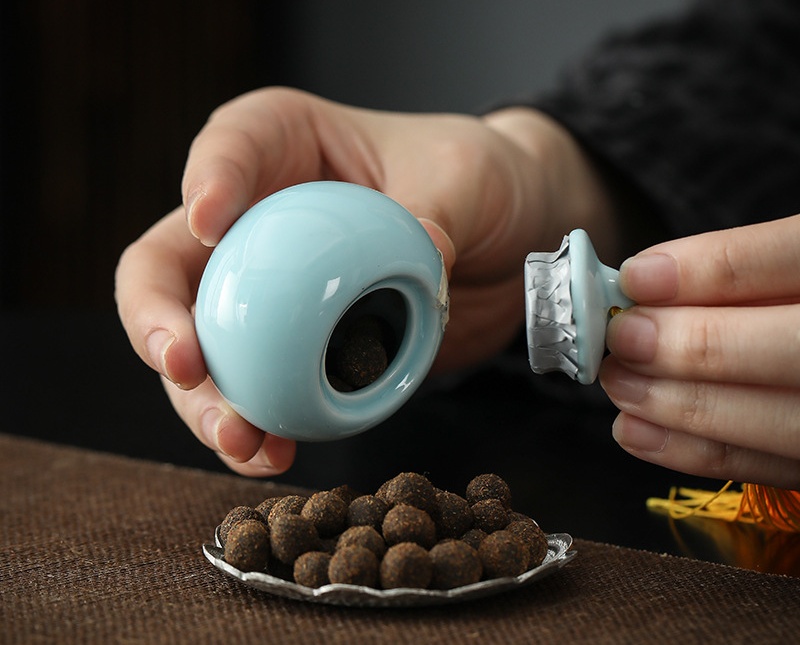
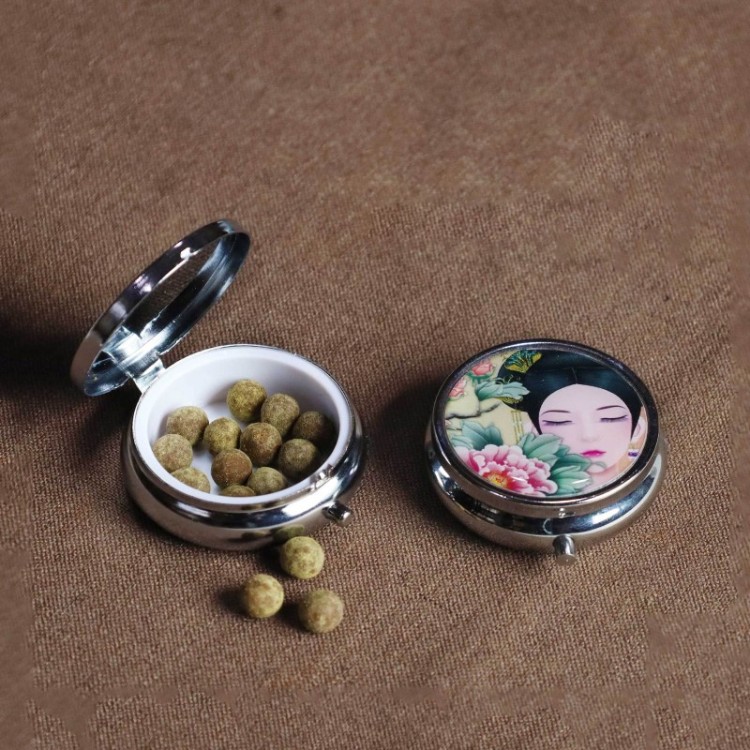
Incense pellets are small, hand-rolled balls made from natural aromatic herbs, woods, and resins, bound together with honey. They are not burned directly. Instead, they are placed on a heated surface — an electric incense warmer or a charcoal disk with a mica plate — and the gentle heat releases the fragrance slowly.
This method is known in Chinese as “separate-heat incense”, and it has been used for centuries to enjoy incense without smoke.
How They Differ from Regular Incense
| Feature | Incense Pellets | Regular Incense Sticks |
| How it works | Heated indirectly | Burned directly |
| Smoke | None | Some |
| Duration | Long-lasting | 30–60 minutes per stick |
| Binder | Honey | Plant |
| Best for | Indoor spaces, sensitive environments | Daily use, rituals |
| Experience | Slow, layered release | Immediate, steady release |
Incense Pellets vs. Western Home Fragrance
If you’re familiar with Western home fragrance, here‘s how incense pellets compare:
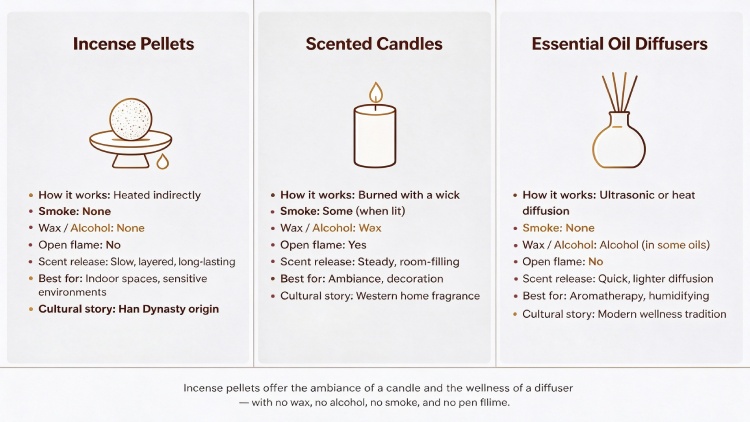
In short: incense pellets offer the ambiance of a scented candle and the wellness appeal of an essential oil diffuser — but with no wax, no alcohol, no smoke, and no open flame. The scent is more natural, layered, and slow-releasing. And it carries a cultural story that Western home fragrance simply doesn’t have.
A Brief History
Incense pellets originated in the Han Dynasty (206 BCE – 220 CE) and reached their peak during the Song Dynasty (960–1279 CE). Song scholars and artists considered “separate-heat incense” one of life‘s refined pleasures, alongside tea, painting, and flower arranging. It was a ritual of mindfulness — a way to slow down, focus, and enjoy the moment.
The Scent Experience
What makes incense pellets special is the way the fragrance unfolds. Because they are heated rather than burned, the scent is released slowly and gradually, layer by layer.
It typically opens with clean herbal, floral and woody notes, then reveals a honeyed, warm depth, and finishes with a calm, lingering base that stays in the room for hours.
This makes them particularly suitable for mid-to-high-end customers who value atmosphere, wellness, and sensory experience.
Available Scents
8 classical Chinese blends and 5 floral options.
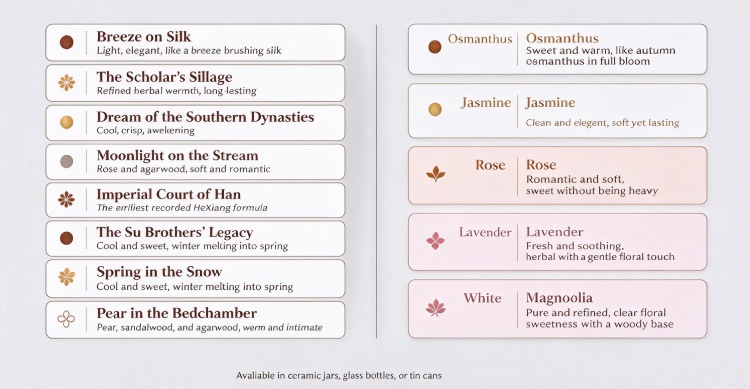
They are just some of the scents listed, custom scents are available and welcome.
Packaging & Uses
Incense pellets are available in ceramic jars, small glass bottles, tin cans, or other custom packagings. The packaging is elegant and retail-ready — suitable for gift sets or shelf display.
Ideal uses:
• Meditation and mindfulness practice
• Reading or tea rituals
• Spa and wellness spaces
• Boutique hotels and guest amenities
• Gift sets and retail
They work best with an electric incense warmer or a candle warmer, which are easy to use and suitable for indoor spaces.
FAQ
Q1: Do I need a special warmer?
Yes — an electric incense warmer, a candle warmer, or a charcoal disk with a mica plate. Electric warmers are the easiest and most common option.
Q2: How many pellets should I use at a time?
It depends on the size of the space. For a standard room, 3 pellets is typical. For a living room, use 5 pellets. Adjust accordingly for larger spaces.
Q3: Are they safe indoors?
Yes. Because they don’t burn, there‘s no smoke and no open flame — making them suitable for indoor spaces.
Q4: How do they compare to scented candles?
Similar ambiance, but no wax, no alcohol, no smoke. The scent is more natural and layered.
Q5: Can they be customized?
Yes — custom fragrances, packaging, and branding are available for wholesale and OEM orders.
Related Products
Classical Herbal Incense Pellets – Classical Blends – 8 traditional formulas, hand-rolled with honey, smoke-free.
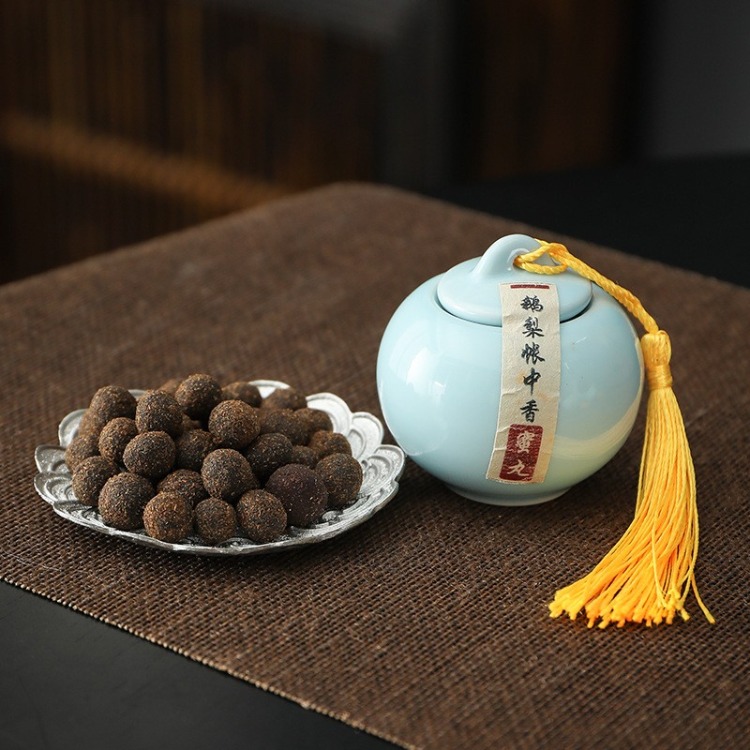
Floral Incense Pellets – Osmanthus, Jasmine, Rose, Lavender, and White Magnolia.
Conclusion
Incense pellets are one of the most distinctive products in Chinese incense culture — and one of the least known internationally. For brands and retailers looking to add something new, culturally rich, and visually appealing to their lineup, they offer a rare combination: familiar experience, unique format, and a deep story.
If you’d like to explore this product for your market, we‘re happy to send samples.
About Kuanggu Incense
Kuanggu Incense was founded in 2021 in Quanzhou, Fujian — the starting point of the Maritime Silk Road. We are rooted in China's Incense Capital, where over 1,000 years of incense-making heritage, 300+ enterprises, and US$2.1 billion in annual output value make us a trusted source for premium natural incense.
We offer incense sticks, cones, coils, innovative incense products , and other accessories — fully customizable — with private label, OEM, ODM and flexible MOQ for brands worldwide.
More than a supplier, we are inheritors of Chinese incense culture, blending ancient wisdom with modern quality to bring Eastern fragrance to the global market.
Ready to bring quality incense to your product line? [Contact us ]
Kuanggu Incense — Rooted in China‘s Incense Capital, sharing the fragrance of the East with the world.
- Incense Pellets: The Eastern “Scented Candle” You’ve Never Heard Of
- How to Customize Incense: A Complete Guide for Brands & Retailers
- Incense vs. Candles: Which Is Better for Your Space?
- Why Does Custom Sampling Cost So Much? – A True Story
- Incense in Religious & Spiritual Traditions: What Do Scriptures Say?
- Incense & Your Health: What Science Says About Brain, Lungs & Sleep
