

Incense vs. Candles: Which Is Better for Your Space?
Article Summary
This article compares incense and candles across multiple dimensions — fragrance strength, burn time, safety, health impact, and suitability for different spaces. We help you decide which option best fits your lifestyle, preferences, and needs.
Introduction
Walk into any home goods store, and you‘ll find aisles dedicated to both candles and incense. Both promise to fill your space with beautiful fragrance. Both create ambiance. But which one is actually better?
The answer isn‘t straightforward — it depends on what you’re looking for. Let‘s break down the differences so you can make an informed choice.
Fragrance Strength: Which Smells Stronger?
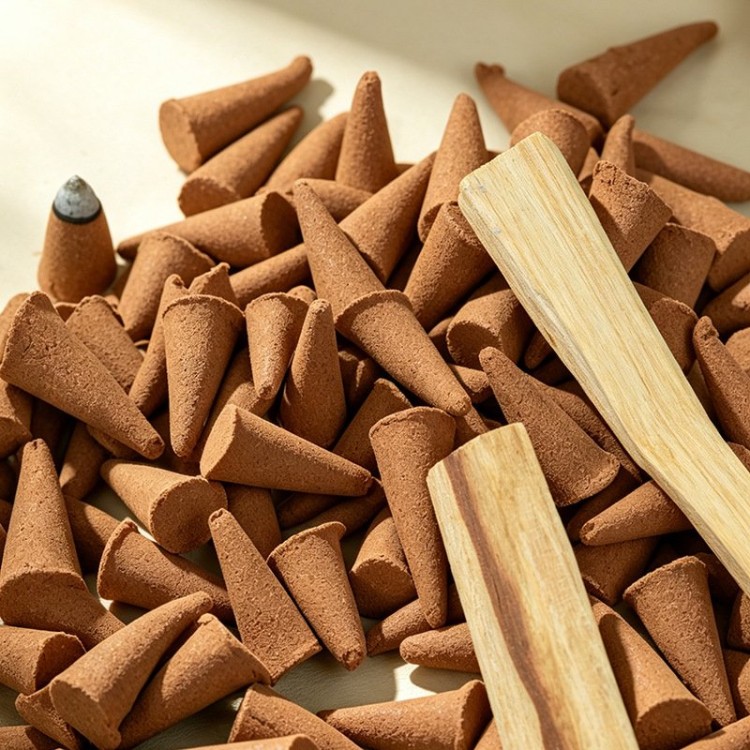
Incense typically produces a stronger, more immediate fragrance. Cones, in particular, burn hotter and faster, releasing a concentrated burst of scent that can fill a room quickly. Incense smoke is rich and full-bodied, often lingering for hours after the burn.
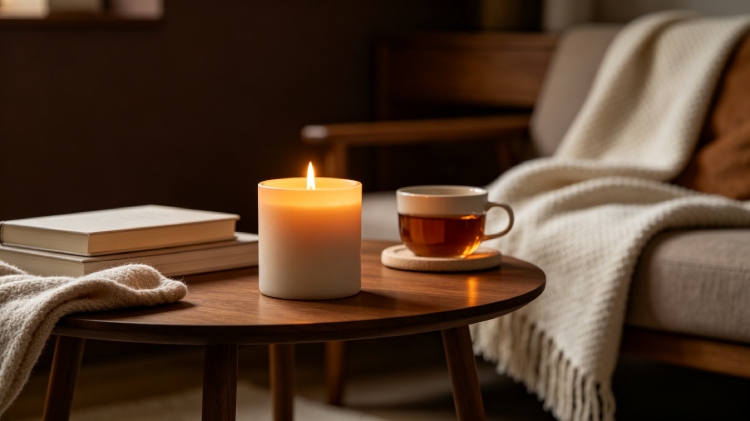
Candles offer a more subtle, ambient fragrance. The scent is released gradually as the wax melts, creating a gentle background aroma rather than an intense presence.
Winner for intensity: Incense.
Winner for subtlety: Candles.
Burn Time: How Long Do They Last?
| Format | Typical Burn Time |
| Incense cones | 10–20 minutes |
| Incense sticks | 25–60 minutes |
| Incense coils | 2–4 hours |
| Small candles | 2–4 hours |
| Large candles | 20–50 hours |
Incense offers short, intense sessions — perfect for meditation, quick refreshes, or rituals. Candles provide long, continuous fragrance — ideal for all-day ambiance.
Smoke vs. Flame: Safety Considerations
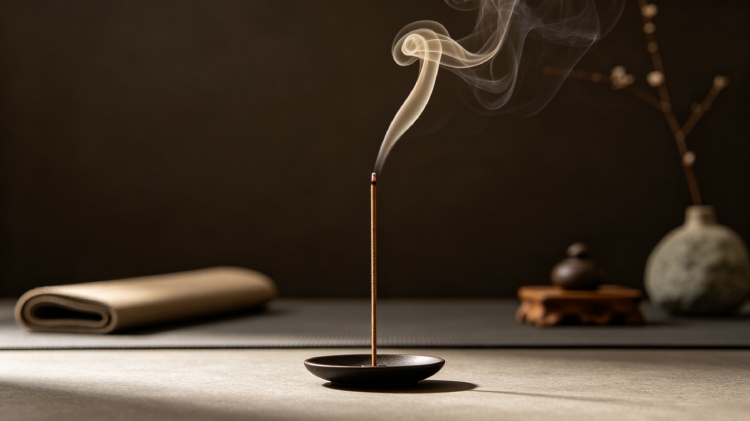
Incense produces visible smoke. While natural incense has a cleaner burn, it still releases particulate matter into the air. Good ventilation is essential. However, incense does not have an open flame after the initial lighting — it smoulders, reducing fire risk compared to candles.
Candles have an open flame throughout the burn. This poses a greater fire risk, especially if left unattended or placed near flammable materials. Candles also require trimming of wicks and careful monitoring.
Health note: Both produce indoor air pollutants. Incense particulate matter emissions are generally higher than candles, but synthetic candles can release significant volatile organic compounds (VOCs). In both cases, ventilation and quality of materials are key.
Aroma Experience: Quality and Complexity
Incense offers a more complex, layered fragrance experience. The scent develops as the material burns — you may notice different notes emerging over time. High-quality natural incense (made from wood powders, resins, and herbs) provides an authentic, nuanced aroma that synthetic alternatives cannot replicate.
Candles offer a consistent fragrance from start to finish. The scent is typically added as fragrance oil, which means the aroma is stable but less dynamic. High-end candles can offer beautiful, well-blended fragrances, but they rarely match the depth of natural incense.
Which One Is Healthier?
Both incense and candles carry health considerations:
• Incense — Natural incense has a cleaner profile than synthetic, but still produces particulate matter. Studies have shown incense emissions can be significantly higher than candles. Choose 100% natural incense and always ventilate.
• Candles — Scented candles can emit VOCs and phthalates. Paraffin wax candles may release harmful compounds. Choose soy wax, beeswax, or coconut wax candles with cotton wicks and natural essential oils for a cleaner burn.
Winner: It depends on the specific product. Both can be relatively safe when made from natural, high-quality ingredients and burned with proper ventilation.
Which Is Better for Your Space?
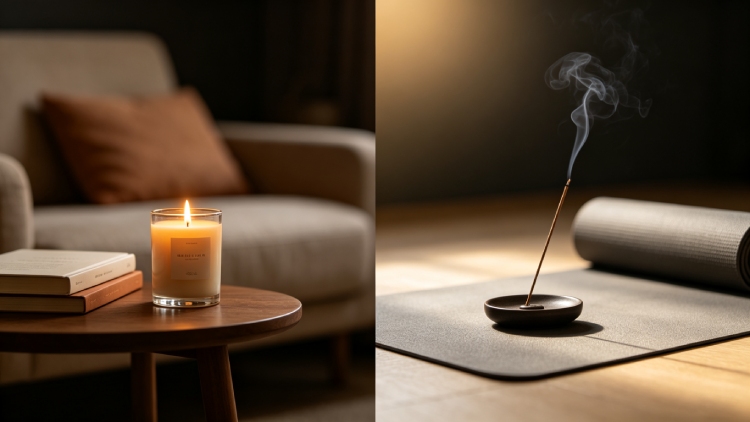
| Scenario | Recommendation |
| Meditation & spiritual practice | Incense — the ritual of lighting and the rising smoke enhance the experience |
| All-day home fragrance | Candles — longer burn time provides continuous scent |
| Quick room refresh | Incense cones — fast, intense fragrance in 10–20 minutes |
| Dinner parties & entertaining | Candles — soft, ambient light and subtle fragrance create atmosphere |
| Office or workspace | Incense sticks — steady, consistent scent without distraction |
| Bedroom (sleep) | Natural incense (lavender/agarwood) — short burn before sleep, or a candle (extinguished before sleep) |
Conclusion
Incense and candles each have their strengths. Incense offers intense, complex fragrance in a short time — ideal for rituals, meditation, and quick refreshes. Candles provide long-lasting, ambient fragrance and soft lighting — perfect for all-day enjoyment and entertaining.
Choose based on your needs, and always prioritize natural ingredients and proper ventilation for the safest, most enjoyable experience.
FAQ
Q1: Is incense healthier than a candle?
It depends on the specific product. Natural incense and natural wax candles (soy, beeswax) can both be relatively safe when burned with proper ventilation. Synthetic versions of either can release harmful compounds.
Q2: Do incense cones make smoke?
Yes — incense cones produce visible smoke as they burn. This is normal and expected. Good ventilation is recommended.
Q3: What smells stronger, candles or incense?
Incense generally produces a stronger, more intense fragrance in a shorter time. Candles offer a more subtle, ambient scent.
Related Products
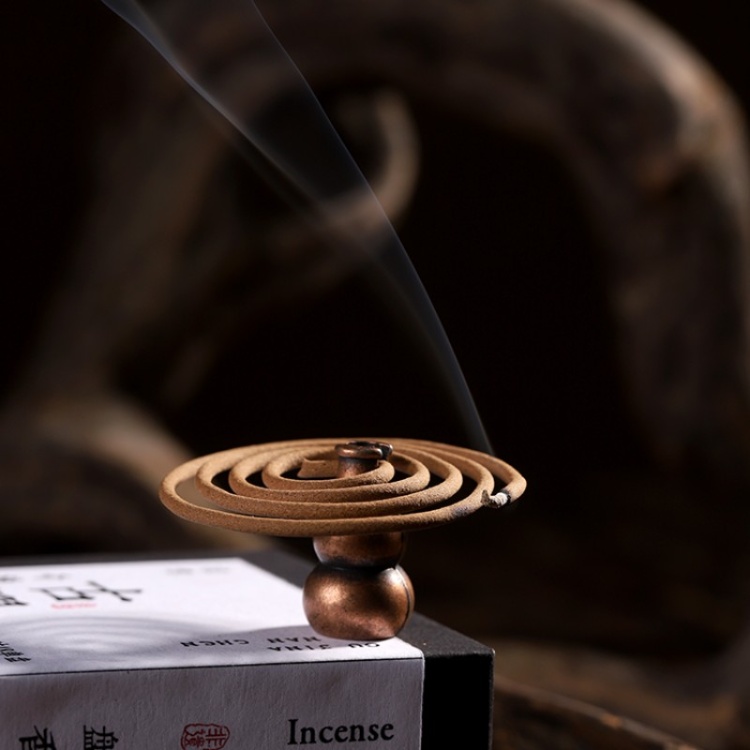
Natural Incense Coils – Available in sandalwood, agarwood, frankincense, and more. 100% natural, clean-burning.
Natural Palo Santo Incense Cones – Available in White Sage, Cedar, Sandalwood, Agarwood/Oud and more. 100% natural, clean-burning.
About Kuanggu Incense
Kuanggu Incense was founded in 2021 in Quanzhou, Fujian — the starting point of the Maritime Silk Road. We are rooted in China's Incense Capital, where over 1,000 years of incense-making heritage, 300+ enterprises, and US$2.1 billion in annual output value make us a trusted source for premium natural incense.
We offer incense sticks, cones, coils, innovative incense products , and other accessories — fully customizable — with private label, OEM, ODM and flexible MOQ for brands worldwide.
More than a supplier, we are inheritors of Chinese incense culture, blending ancient wisdom with modern quality to bring Eastern fragrance to the global market.
Ready to bring quality incense to your product line? [Contact us ]
Kuanggu Incense — Rooted in China‘s Incense Capital, sharing the fragrance of the East with the world.
- Incense Pellets: The Eastern “Scented Candle” You’ve Never Heard Of
- How to Customize Incense: A Complete Guide for Brands & Retailers
- Incense vs. Candles: Which Is Better for Your Space?
- Why Does Custom Sampling Cost So Much? – A True Story
- Incense in Religious & Spiritual Traditions: What Do Scriptures Say?
- Incense & Your Health: What Science Says About Brain, Lungs & Sleep
